La Rose Perrière wines are taking on international cuisines.
An epicurean escape around the world, courtesy of La Rose Perrière! This is what we offer in this article, where you'll discover the major international culinary families: Mediterranean, Asian, Latin, and Indian. We'll suggest simple, flavorful pairings that will transform each of your meals into a gourmet experience, harmonious and sometimes even a little daring, without ever losing sight of the essential: the pleasure of sharing a meal!
Curries
With a curry dish, it's best to choose an aromatic wine that's low in tannins, not too alcoholic, and offers freshness, perhaps with a touch of residual sugar to balance the spiciness. Avoid very tannic reds and overly oaky whites, as they intensify the burning sensation and overpower the spices.
Aloo Gobi, a dry Indian curry of potatoes and cauliflower
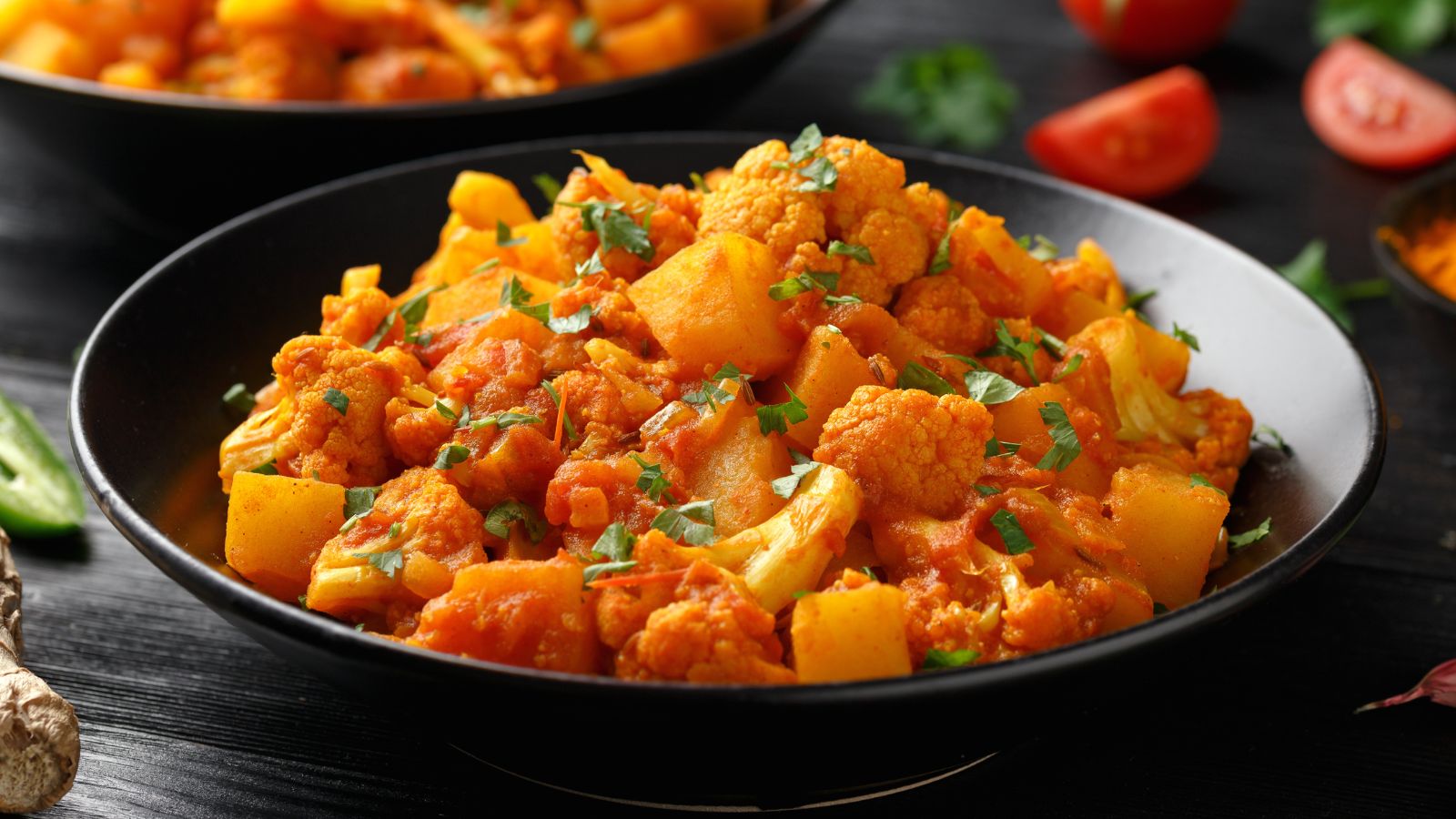
Photo ©Canva
Here is an easy-to-make dish, a traditional vegetarian recipe very popular in Indian and Pakistani cuisines.
The ingrédients
- 1 tablespoon of vegetable oil,
- 1 small onion,
- 1 clove of garlic,
- 1 teaspoon of paprika,
- 1 teaspoon of ground ginger,
- 1 teaspoon of garam masala
- ½ teaspoon turmeric
- 1 teaspoon cumin
- 1 teaspoon cumin seeds
- A few fresh coriander leaves
- 2 tablespoons tomato paste
- 1 cauliflower (approximately 225g)
- 200g of potatoes
- Salt and pepper
Preparing the recipe
- Heat the oil over medium-low heat in a sauté pan or large saucepan and toast the spices (except the cumin seeds) for 1 minute.
- Add the chopped onion and minced garlic and sauté them for a few minutes without browning them in the spice mixture. Add a drizzle of oil if needed to prevent the spices from sticking.
- Peel and chop the potatoes, cut the cauliflower into florets, wash and dry them.
Add the potatoes, cauliflower, cumin seeds, fresh coriander (optional), and chopped tomatoes and cook for 5 minutes over medium heat. - Add 50 ml of water, stir, cover, and continue cooking for 20 to 30 minutes, stirring occasionally, until the vegetables are tender. Season with salt and pepper at the end of cooking.
- Cook your rice, lentils, or side dish of choice.
The La Rose Perrière Pairing
Served slightly chilled with a moderately spiced Aloo Gobi, our La Rose Perrière Pinot Noir will complement the cauliflower, potato, and spices without adding bitterness or intensifying the heat. Its fruity character will bring a beautiful balance to the dish.
Source : Cuisine AZ
Ceviche: the iconic dish of all Latin America
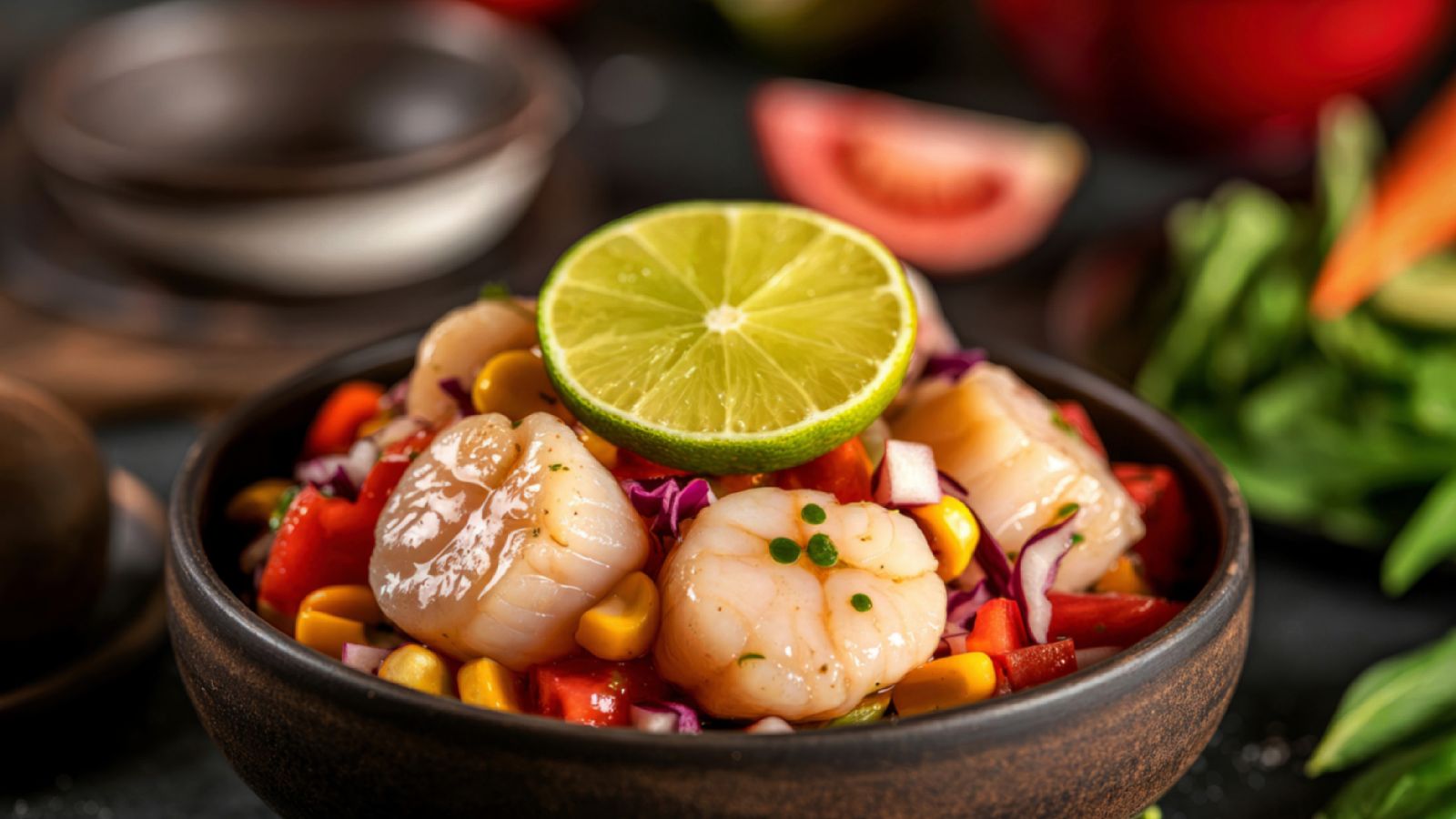
Photo ©Canva
Ceviche is an iconic dish of Peruvian cuisine, made with raw fish or seafood marinated in lime juice, which "cooks" them with its acidity. Typically composed of fresh white fish (corvina, cod), thinly sliced red onion, cilantro, aji pepper (limo or amarillo), salt, and sometimes ginger, it offers an explosion of briny, acidic, and crunchy freshness. Prepared on the Pacific coasts of Peru, Ecuador, and northern Chile, this dish has been recognized by UNESCO as an Intangible Cultural Heritage since 2023 for its social and ritual significance. In Peru, it is a staple summer dish, sold in cevicherías, with a National Ceviche Day on June 28th.
Ceviche from the north coast of Peru
Typical of regions like Trujillo or Chiclayo, where ultra-fresh Pacific Ocean seafood dictates the tradition. It is a raw white fish (corvina, cod, grouper) marinated in abundant lime juice, which "cooks" it through acidity, with an explosion of crunchy red onion, cilantro, aji amarillo or limo chili, and often ginger or celery for the umami touch.
The ingrédients
- 1 kg sole fillet
- 250 ml lime juice
- 2 teaspoons garlic
- 1 teaspoon flat-leaf parsley
- 1 Espelette pepper
- 2 onions
- Fresh coriander
- Salt and pepper
- 4 pre-cooked vacuum-packed corn cobs
- Salad leaves
Preparing the recipe
- Cut the fish fillets into small cubes, about 3 to 4 cm in size and 2 cm thick. Soak them in a bowl of cold, salted water.
- Finely slice the onions, rinse them thoroughly under cold running water, and then drain them.
- Remove the fish from the water and pat it dry with paper towels.
- Place the white fish in the bottom of a shallow dish. Add the onions, chopped garlic, chopped parsley and cilantro, and a few thin slices of Espelette pepper. Season with salt and pepper.
- Pour over the lemon juice and let it marinate for at least 30 minutes so the fish is well-flavored.
- Divide among shallow bowls, on a bed of lettuce. Serve with half an ear of corn.
La Rose Perrière pairing
To avoid a real faux pas, red wines should be avoided with ceviche. Opt instead for a dry, chilled Sauvignon Blanc. We suggest pairing the ceviche with our South African Kroonpoort, which brings acidity, freshness, and citrus notes (particularly grapefruit) that complement the ceviche's marinade without overpowering it.
Source : Cuisineaz.com
Beef Wellington
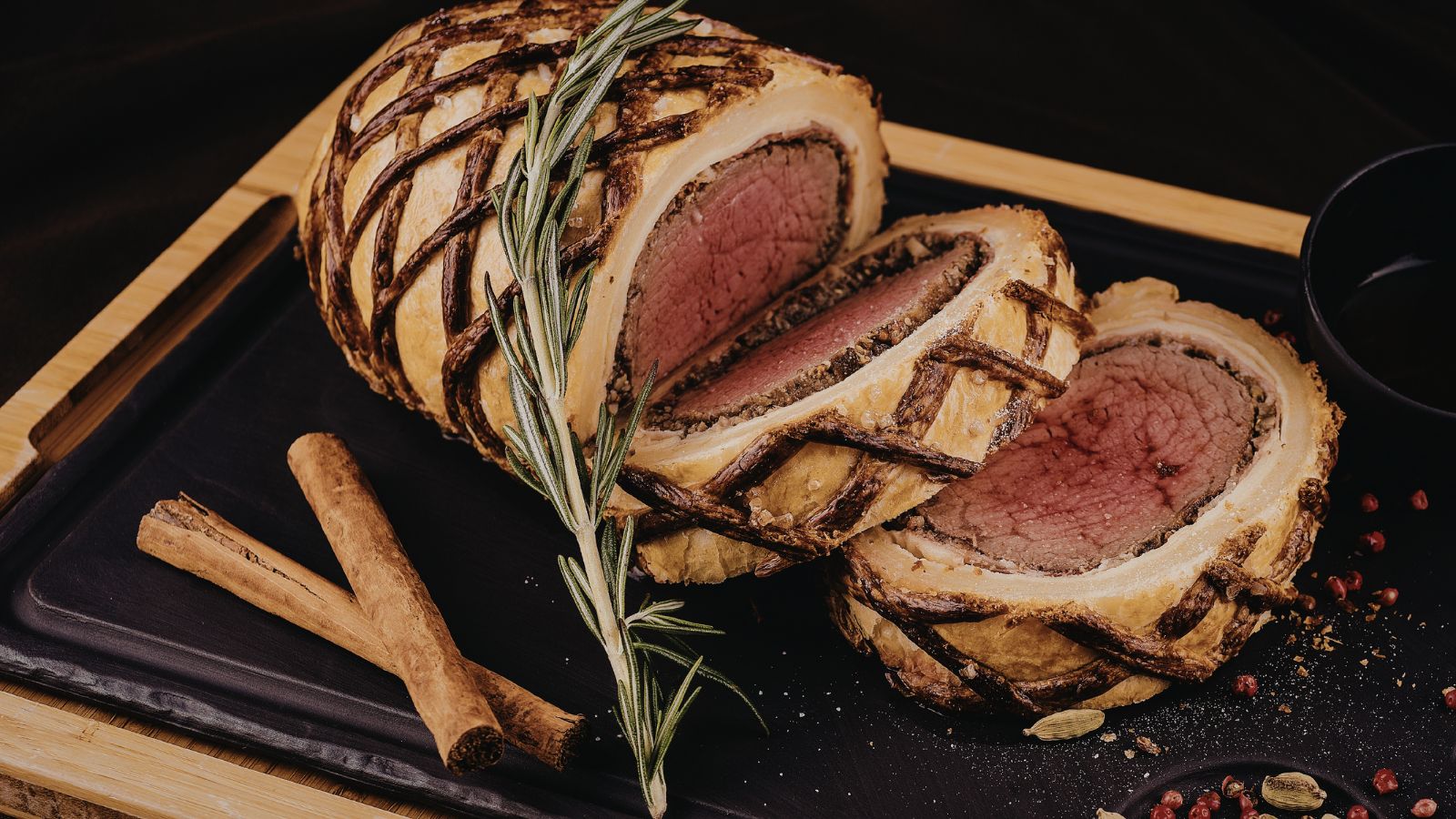
Photo ©Canva
An iconic dish of British cuisine, Beef Wellington takes its name from the Duke of Wellington. This dish combines elegance and simplicity, richness (from the prime cuts of meat and the umami flavor of the mushrooms) and crispiness, with precise cooking to keep the center pink. Served in slices with a Madeira or red wine sauce, it's a classic that's perfect for a festive occasion.
The ingrédients
- 800g beef fillet
- 2 sheets of puff pastry
- 3 shallots
- 1 egg
- 150g button mushrooms
- 3 tablespoons olive oil
- Salt and pepper
- 1 handful of flat-leaf parsley
Preparing
- Season the beef fillet with salt and pepper. Pan-fry it for about 3 minutes on each side, then let it rest on a plate for about 10 minutes.
- Finely chop the onions, mushrooms, and parsley, then sauté them in an oiled pan.
- Preheat the oven to 250°C (480°F). Unfold and spread one of the two sheets of puff pastry onto a baking sheet lined with parchment paper. Spread half of the onion mixture over the pastry, then place the fillet on top. Cover the fillet with the remaining onion mixture.Cover everything with the second sheet of puff pastry, sealing the edges with a little water.
- Brush the top with a beaten egg yolk.
- Bake in the preheated oven for about 20 minutes for medium-rare. Serve hot.
La Rose Perrière pairing
Beef Wellington, with its tender beef, mushroom duxelles, and rich puff pastry, pairs perfectly with structured and elegant red wines. Powerful Bordeaux wines will balance the richness of the dish. Our 2020 Clos Les Grandes Versannes will bring silky tannins and ripe fruit to beautifully complement the meat and mushrooms.
Source : Journaldesfemmes.fr
Greek moussaka
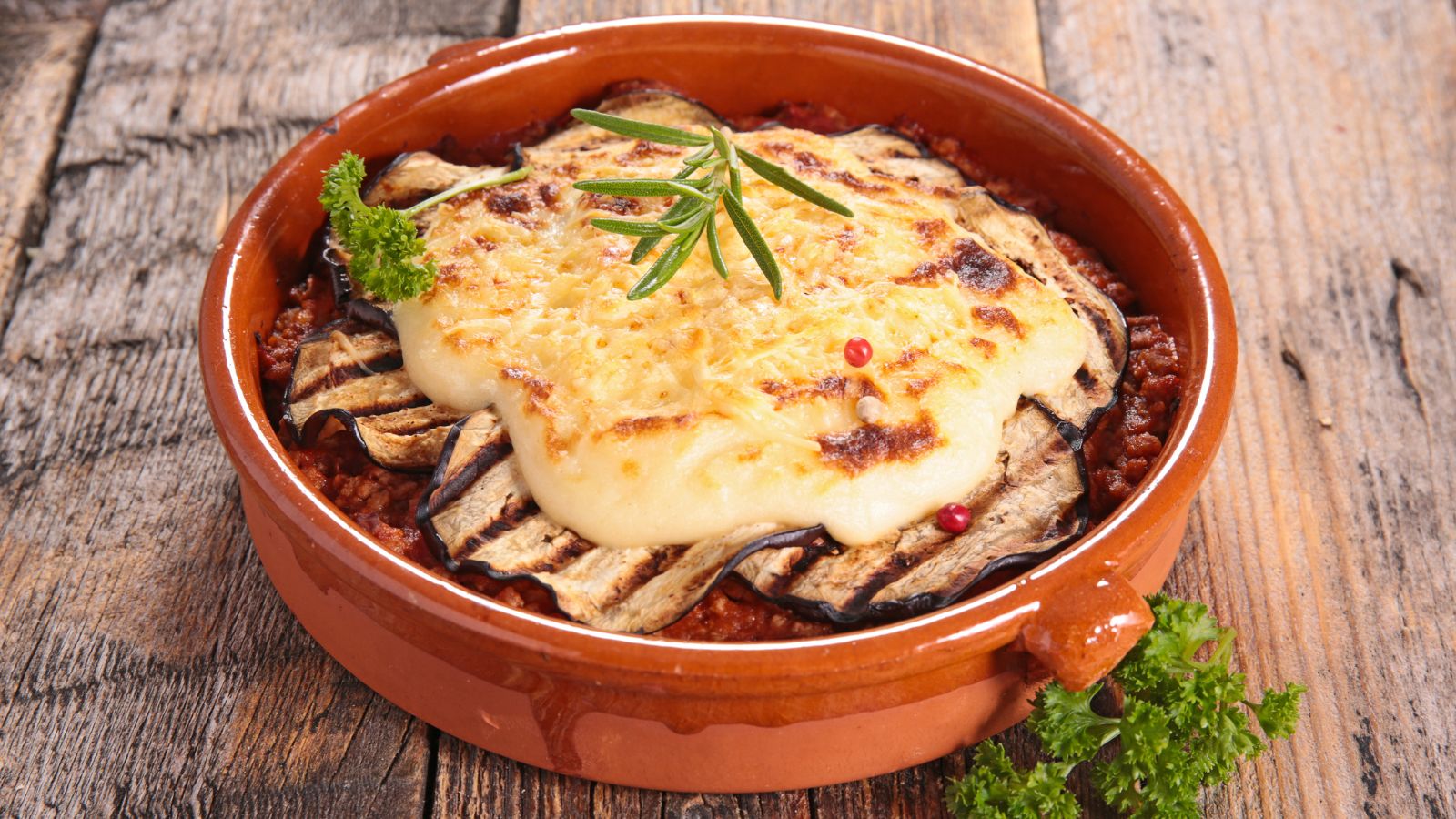
Photo ©Canva
Here's a Mediterranean dish whose reputation precedes it! It's a traditional dish emblematic of Greek cuisine, prepared in layers and baked in the oven. It's a generous, comforting, family-style gratin, originating in the Balkans but popularized in its Greek version in the 20th century.
The ingrédients
- 2 eggplants
- 5 tomatoes + 1/2 carton of tomato passata
- 1 onion
- Olive oil
- 30g butter
- 1 tablespoon honey
- Nutmeg
- Salt and pepper
- 6 potatoes
- 500g ground beef
- 1 teaspoon cinnamon
- Béchamel sauce: 20g butter, 3 tablespoons flour, and 350ml milk
Preparing the recipe
- Finely chop the onions and sauté them until golden brown in a small saucepan.
- Add the roughly chopped tomatoes and 2 generous tablespoons of olive oil, the cinnamon, honey, salt, and pepper. Let it all simmer for 25 minutes (or longer, until you're ready to prepare the meat) over medium heat. The sauce should be thick enough to be blended with ready-made tomato purée.
- Slice the eggplants into rounds (without peeling them), salt them generously, and let them drain while you prepare for the next step. Tip for draining eggplants: in a dish, alternate a layer of salted eggplant slices with a layer of paper towels, or place them in a colander.
- Peel and slice the potatoes into thin rounds. Arrange the potato slices in the bottom of a deep, greased gratin dish. Drizzle the potatoes with a little (3 tablespoons) of the juice released by the simmering tomatoes. Place the dish of potatoes under the broiler for 5 to 15 minutes, depending on your oven, until golden brown.
- Now that they have released their juices, fry the eggplant slices in a pan over high heat to grill them a little on each side, then set aside.
- In a large pot, brown the ground meat in butter over fairly high heat, season with salt and pepper, and drain off any liquid released by the meat. Add the tomato and onion sauce and reduce the heat to very low.
- Take the potato dish out of the oven and preheat the oven to 200°C (thermostat 6-7).
- In a small saucepan over low heat, melt the 20g of butter until it turns a light golden brown. Add the flour and stir until smooth. Gradually whisk in the milk, stirring constantly. This may take up to 10 minutes; the sauce should be quite thick. Season with salt, pepper, and a little grated nutmeg.
- Assembling the moussaka. Over the layer of potatoes, spread half of the minced meat with the tomato, then half of the eggplants, then the other half of the meat, then the other half of the eggplants, a drizzle of olive oil and finish with the béchamel sauce.
- Place everything in the oven at 200°C (thermostat 6-7) and let it cook for 1 hour (the béchamel should be crispy and golden).
La Rose Perrière pairing
Château La Rose Perrière 2019 is the perfect pairing for moussaka: it offers a fruity roundness, silky tannins, and subtle oak notes that perfectly balance the creaminess of the béchamel sauce, the minced meat, and the spices of the tomato sauce. The wine's aromas of ripe black fruit, spices, and vanilla complement the rich flavors of the moussaka (eggplant, lamb or beef, cinnamon, nutmeg).
Source : Marmiton
Pairing wine and food internationally: some basic rules
Do you love international cuisine and regularly want to offer your guests delicious food and wine pairings? To harmonize wine and food internationally, the key is to think in terms of balance rather than selecting food and wine based on the country or the wine's color.
Balance of flavors: Salty and fatty dishes enhance the acidity and fruitiness of the wine. Crisp whites, sparkling wines, and juicy reds are ideal. As for sweet or highly umami flavors (soy sauce, Asian BBQ, aged cheeses), they accentuate the bitterness and acidity of the wine. You'll benefit from pairing these dishes with wines that are fruity, round, or even have residual sugar.
Balance of weight and intensity: a light dish will find its best match in a light wine with fresh acidity, low alcohol, and minimal oak. Conversely, a rich or highly aromatic dish pairs perfectly with a structured and more powerful wine. A very complex or very spicy dish requires a wine with character; otherwise, the wine will be completely overwhelmed. Balancing with chili peppers: Indian, Thai, or Mexican cuisines suggest choosing wines with low alcohol content and low tannins, offering freshness or even a touch of sweetness (a fruity rosé, for example).
Play on complementarity or contrast: use similar styles (buttery white with creamy dishes, spicy red with hot food) to prolong the aromatic experience, or, conversely, use the wine's acidity, sweetness, or freshness to cut through the richness, saltiness, or spiciness (sparkling wine with fried foods, crisp white with ceviche, off-dry with blue cheeses).
Whatever type of cuisine you choose, create a gradual increase in intensity throughout the meal, from lightest to most intense, from dry to sweet. And when choosing wines, select wines that are more acidic and slightly sweeter than the dish to avoid them seeming flat or overpowering.
Following these basic principles will allow you to seamlessly transition from Peruvian ceviche to Spanish tapas or Thai curry without changing your approach.
Bon appétit !